The Master System for Year-Round Indoor Herb Production
There's a significant difference between occasionally growing herbs indoors and maintaining a system that reliably produces fresh herbs every week of the year. The first is a pleasant hobby. The second is genuine food independence.
This guide teaches you the master system: how to combine the right herbs, the right equipment, and the right management approach to ensure you never run out of homegrown herbs — not in January, not in August, not ever.
The Foundation: Understanding Plant Light Requirements
Year-round indoor herb production begins with understanding that light management is an active practice, not a one-time setup. Learn what herbs work best for consistent production in our guide to the best herbs to grow indoors and whether herbs can truly grow inside year round. Your plants' light needs change with:
- The seasons (natural light contribution changes dramatically)
- Plant growth stage (seedlings need different light than mature plants)
- Species (basil needs more light than mint)
- Plant position relative to the light source
The Light Management Calendar
Build your light schedule around the solar calendar:
- Winter solstice (Dec 21) through March equinox: 16 hours grow light daily
- March through June: 14 hours grow light, supplemented by increasing natural light
- June through September: 12–14 hours, possibly less if growing near strong south windows
- September through December: Gradually increase to 16 hours as natural light fades
Automate this with a digital timer outlet — set it and forget it, adjusting every 6–8 weeks for seasonal transitions.
The Succession Planting System: The Core of Year-Round Production
Succession planting is the practice of starting new plants at staggered intervals so that as one generation finishes its productive life, the next generation is already in full production. This is the single most important technique for continuous yield.
The Three-Cohort Rotation System
Divide your herb production into three rolling cohorts, each started 3 weeks apart:
Cohort A (Weeks 1–3): Seedling Stage
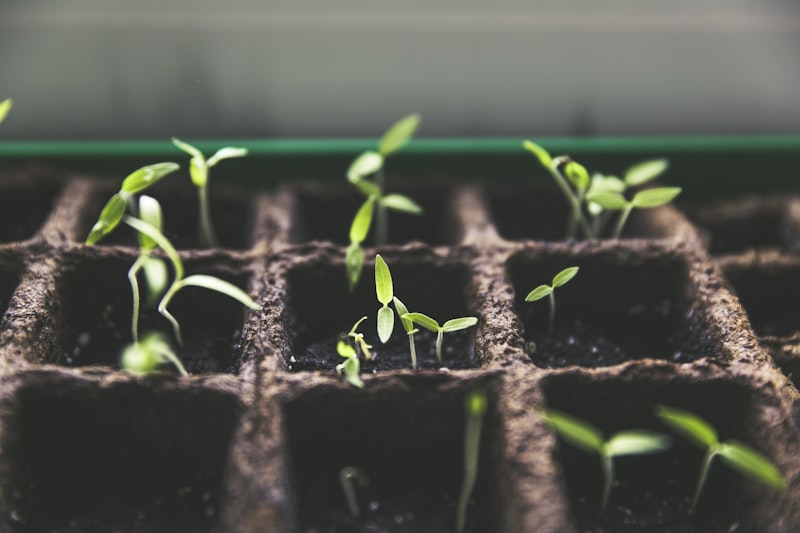
Seeds germinating or recently transplanted seedlings establishing their root systems. These plants require:
- Bottom heat from a heat mat for germination (70–75°F soil temperature)
- Bright light but not intense heat (position slightly further from light source)
- Consistent moisture — never let the seedling mix dry out
- High humidity — cover with a humidity dome until first true leaves appear
Cohort B (Weeks 4–7): Growth Stage
Plants are established, producing new leaves rapidly, and approaching harvest readiness. These plants require:
- Full light intensity — position directly under grow lights
- Regular watering — they're growing fast and consuming water quickly
- First fertilizer application (half strength liquid fertilizer)
- Light harvesting of outer leaves to encourage branching
Cohort C (Weeks 8–12+): Production Stage
Mature plants in full production, being harvested weekly. These plants require:
- Regular, substantial harvesting to prevent flowering and extend productive life
- Regular fertilizing (every 2–3 weeks)
- Monitoring for pests or decline
- Planning for succession — this cohort's end signals time to start a new Cohort A
Species Selection for Year-Round Productivity
The Core Year-Round Herb Collection
For reliable 365-day production, build your garden around these workhorses:
- Basil: 8-week production cycles, succession plant every 6 weeks
- Mint: Perennial, minimal management, harvest continuously
- Chives: Perennial, cut and regrow repeatedly year-round
- Parsley: Biennial, 18–24 month productive life once established
- Thyme: Semi-perennial, long-lasting, minimal replacement needed
- Oregano: Long-lived, consistent producer, minimal management
Fast-Cycle Herbs (Succession-Critical)
These herbs need succession planting to maintain continuous production:
- Cilantro: Succession plant every 3–4 weeks
- Dill: Succession plant every 4 weeks
- Basil (especially in summer): Succession plant every 6–8 weeks
The Year-Round Grow System Setup
Equipment for Serious Year-Round Production
Casual herb growing can work with a windowsill and a simple grow light. Genuine year-round production — the kind that contributes 90% of your fresh herb needs — benefits from a more organized system:
Option 1: The Countertop System
A compact, self-contained LED grow system (like a pod-style countertop unit) that manages light and water automatically. These systems house 9–12 plants and are ideal for apartments. They're aesthetically beautiful, low maintenance, and genuinely productive. The limitation: capacity is fixed.
Option 2: The Tiered Shelf System
A 4-tier wire shelving unit (approximately 2×4 feet footprint) with LED grow light strips mounted under each shelf creates a home-scale growing operation. Each shelf holds 4–8 herb pots. Total capacity: 16–32 plants. This setup requires slightly more management but offers far greater variety and volume. Perfect for achieving genuine food independence goals.
Option 3: The Dedicated Grow Space
A spare closet, alcove, or small room equipped with full-spectrum LED lighting, a timer, a fan, and shelving becomes a dedicated year-round food production space. This approach can support not just herbs but leafy greens, microgreens, and even small vegetables — moving significantly toward the 90% fresh produce goal.
Nutrient Management for Year-Round Production
Plants grown continuously in containers without soil renewal must be fed consistently. Year-round growing requires a reliable fertilization schedule:
- Seedlings (first 4 weeks): No fertilizer. Fresh potting mix provides adequate nutrition.
- Adolescent plants (weeks 4–8): Half-strength liquid fertilizer every 3 weeks.
- Mature plants in production: Full-strength liquid fertilizer every 2 weeks during active growth.
- Winter/rest periods (for non-grow-light plants): Reduce to once per month or stop entirely.
Organic liquid fertilizers (fish emulsion, seaweed extract) are safe, effective, and build soil biology in your containers over time. Avoid over-fertilizing — more is not better and can cause fertilizer burn and excessive leafy growth at the expense of flavor.
Troubleshooting Year-Round Systems
Problem: Production Gaps (Weeks Without Harvest)
Cause: Succession planting gaps — you didn't start new plants in time.
Fix: Set a recurring calendar reminder every 3 weeks to start a new tray of seedlings. Never let Cohort A go unfilled.
Problem: Plants Declining in Winter
Cause: Insufficient light compensation for shorter days.
Fix: Increase grow light hours to 16 per day. Move grow lights 2–4 inches closer to plant canopies. Consider adding a second grow light to the system.
Problem: Pest Buildup Over Time
Cause: Continuous growing creates continuous pest pressure without the natural reset of seasons.
Fix: Monthly preventive treatment with neem oil spray on all plants. Sticky yellow traps for flying pests. At least one full system rest/clean every 12 months — remove all plants, clean shelves, replace potting mix.
Recommended Tools for Year-Round Growing
Placeholder — Recommended Indoor Gardening Tools:
- 4-Tier Wire Shelving with LED Grow Lights
- Digital Timer Power Strip
- Seedling Heat Mat with Temperature Controller
- Organic Liquid Fertilizer (Fish Emulsion or Seaweed)
- Soil Moisture Meter
- Yellow Sticky Traps for Pest Monitoring
Frequently Asked Questions
How many plants do I need for year-round herb supply for one household?
For a household of 2–4 people using herbs daily in cooking, plan for 12–20 active herb plants at various growth stages. This provides sufficient harvest with appropriate diversity. The three-cohort succession system maintains this population continuously without overwhelming your space.
How do I remember when to succession plant?
Set a recurring 3-week reminder in your phone calendar. When it fires, start a new tray of whatever herbs are in your Cohort A slot. This 5-minute task every 3 weeks is the engine of year-round production.
Can I use LED strips instead of proper grow lights?
Consumer LED strips generally don't provide adequate light intensity or spectrum for food plant production. Use LED strips designed specifically for plant growing (grow light strips with red and blue LEDs, or full-spectrum white LEDs rated for plant growing). These are available for $20–50 per strip and make a real difference.
What's the most cost-effective year-round setup?
A 4-tier wire shelving unit ($40–70) with inexpensive LED grow light strips ($20–40 per shelf) and a timer power strip ($15–25) creates a full year-round growing system for $100–200. This investment, combined with seed costs of $20–40 per year, produces hundreds of dollars of fresh herbs annually — paying for itself in one season.